
Archives
-
Al-Afham: Journal of Islamic Studies
Vol. 3 No. 1 (2026)This issue presents six scholarly articles that explore the intersections of Islam, culture, and contemporary socio-intellectual discourse in Indonesia and Southeast Asia. The contributions range from analyses of Islamization processes and local cultural identity to Qur’anic ethics in modern communication, literacy, and ecological interpretation. Several articles also address contemporary issues such as the reinterpretation of anthropocentric paradigms in Qur’anic exegesis and the shifting meanings of Islamic symbols in the digital age. Together, they demonstrate how Islamic studies continue to develop through engagement between textual tradition and evolving social realities. Overall, this issue offers a concise yet critical reflection on the continuity and transformation of Islamic thought in response to contemporary challenges.
-
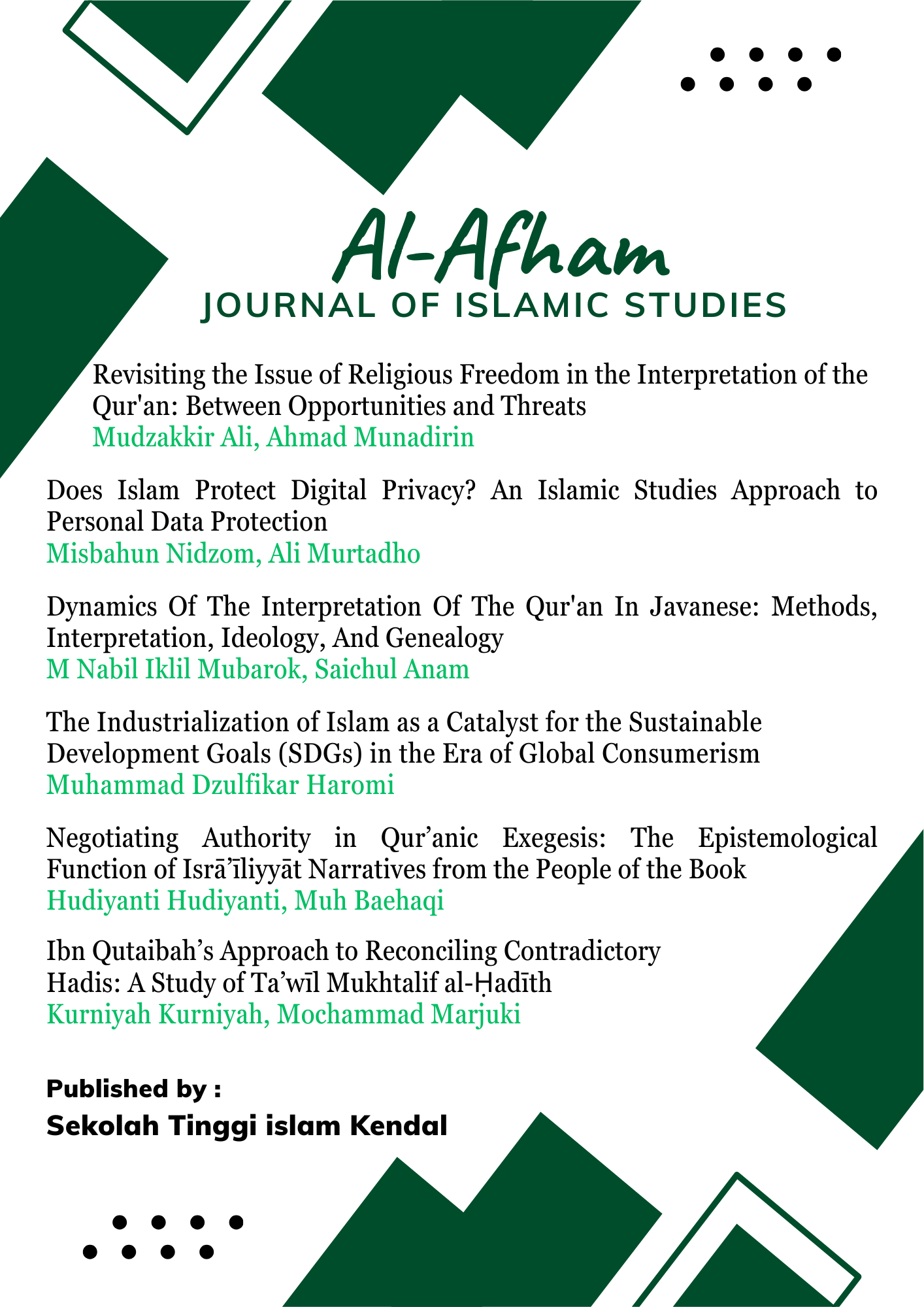
Al-Afham: Journal of Islamic Studies
Vol. 2 No. 2 (2025)This issue brings together six cutting-edge contributions that explore the intersections of classical Islamic scholarship and contemporary global challenges. From re-examining the Qur’an’s stance on religious freedom and interrogating Islamic ethics in the age of digital privacy, to tracing the genealogy of Javanese Qur’anic exegesis and situating Islam within the discourse of the Sustainable Development Goals, the articles highlight both continuity and transformation in Islamic thought. Complementing these contemporary concerns, the issue also revisits the epistemological function of Isrā’īliyyāt narratives and showcases Ibn Qutaibah’s enduring method of reconciling contradictory hadiths. Together, these studies offer readers a timely, critical, and insightful engagement with the evolving landscape of Islamic studies in the 21st century.
-
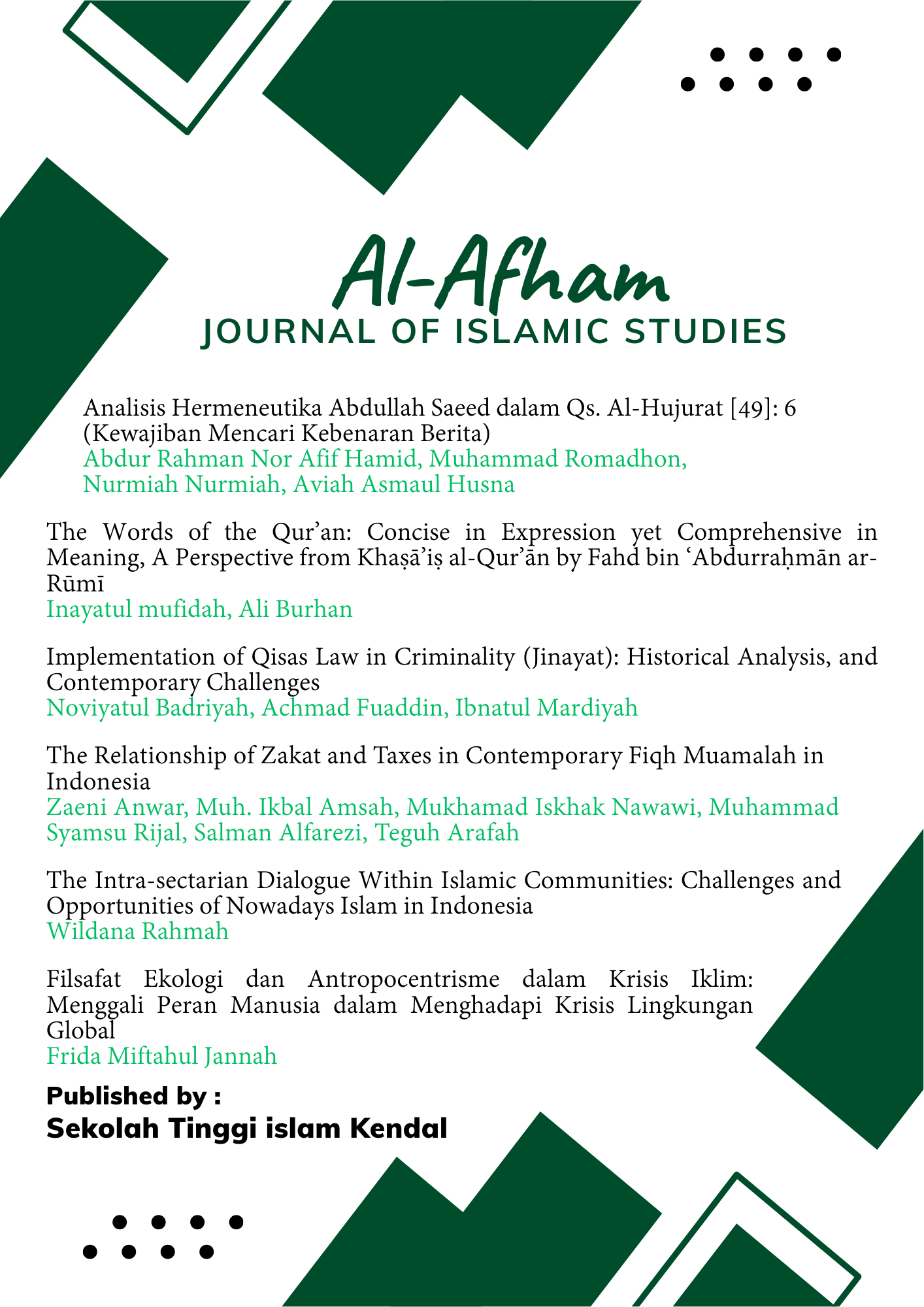
Al-Afham: Journal of Islamic Studies
Vol. 2 No. 1 (2025)This issue brings together a range of Islamic studies scholarship that remains grounded in classical traditions while engaging thoughtfully with contemporary human concerns. The articles explore Qur’anic interpretation as an ethical and epistemic practice, examine the depth and precision of Qur’anic language, and address the application of Islamic law within modern social and legal frameworks. At the same time, this issue highlights pressing themes such as intra-Muslim dialogue, social cohesion, and ecological responsibility, reflecting an understanding of Islam as a living intellectual tradition that speaks to real social challenges. Collectively, the contributions affirm Al-Afham: Journal of Islamic Studies as a space for critical, balanced, and humane scholarship that resonates with the standards and spirit of internationally recognized academic discourse.
-
Al-Afham: Journal of Islamic Studies
Vol. 1 No. 2 (2024) -
Al-Afham: Journal of Islamic Studies
Vol. 1 No. 1 (2024)